Art Therapy
[1] Tymoszuk, U., Perkins, R., Fancourt, D., & Williamon, A. (2020). Cross-sectional and longitudinal associations between receptive arts engagement and loneliness among older adults. Social Psychiatry and Psychiatric Epidemiology, 55(7), 891-900. https://link.springer.com/article/10.1007/s00127-019-01764-0
Takeaway
Frequent engagement with certain receptive arts activities and venues, particularly museums, galleries and exhibitions, may be a protective factor against loneliness in older adults.
[2] de Witte, M., Aalbers, S., Vink, A., Friederichs, S., Knapen, A., Pelgrim, T., … & van Hooren, S. (2025). Music therapy for the treatment of anxiety: a systematic review with multilevel meta-analyses. EClinicalMedicine, 84. https://www.thelancet.com/journals/eclinm/article/PIIS2589-5370(25)00225-1/fulltext
Takeaway
The findings suggest that music therapy, particularly receptive methods or combinations of receptive and active approaches, offer effective, flexible, and scalable interventions for reducing anxiety symptoms, offering psychological benefits that enhance patient autonomy and quality of life, though its impact on physiological outcomes and long-term effects requires further research.
[3] Fausto, D. Y., Martins, J. B. B., Dominski, F. H., & de Azevedo Guimarães, A. C. (2025). Effects of jazz dance and concurrent training on psychological variables in menopausal women: A randomized controlled trial: DY Fausto et al. Archives of Women’s Mental Health, 28(3), 525-540. https://link.springer.com/article/10.1007/s00737-024-01509-2
Takeaway
Both interventions were beneficial, however dance showed immediate results for anxiety and depression, and concurrent training for stress. Considering mood, concurrent training was more effective for anger, mental confusion, and fatigue, while both interventions were effective for vigor.
[4] Levine, B., & Land, H. M. (2016). A meta-synthesis of qualitative findings about dance/movement therapy for individuals with trauma. Qualitative health research, 26(3), 330-344. https://journals.sagepub.com/doi/full/10.1177/1049732315589920?casa_token=EUUrqycYthYAAAAA%3Axx-qa9NcMO6ap3AKaTopuTq71N90M8LC631oKSMkCsyMmFq_Qf9dru_y3
MImw3xhS0SEoaUs6NXKezs
Takeaway
Preliminary interdisciplinary research findings suggest engaging the body in trauma treatment might reduce the length of treatment by addressing the connections among thoughts, feelings, neurobiology, and somatic responses in the survivor. Findings from the present study can perhaps be applied to the development of body-oriented intervention for mental health care workers.
Artists – Fair Treatment
Best Practices for Craft, Media & Visual Artists Best Practices are industry standards: the most ethical, equitable and reasonable form of any business arrangement between an art professional and an employer, commissioner, gallery, agent or sponsor. They are voluntary guidelines, not laws: they work when artists and the people who engage them know the ground rules and wish to conduct business fairly.
http://carfacalberta.com/pdfs/best-practices-alberta-2020.pdf
ARFAC-RAAV Minimum Recommended Fee Schedule
Guidelines on what visual and media artists should be paid for their copyright and other professional services. Canadian Copyright laws provide artists with the right to be paid for exhibitions and reproductions, and most public funders require that museums and public galleries pay royalties and fees according to our guidelines. All rates shown in the Fee Schedule are in Canadian dollars and PST/GST/HST (if applicable) is not included.
Financial & Legal
The Ultimate Guide to Writing a Nonprofit Business Plan
A business plan can be an invaluable tool for your nonprofit. Even a short business plan pushes you to do research, crystalize your purpose, and polish your messaging. This blog shares what it is and why you need it, ten steps to help you write one, and the dos and don’ts of creating a nonprofit business plan.
The Ultimate Guide to Writing a Nonprofit Business Plan
Grants to Grantee Organizations Toolkit
Recently, the Income Tax Act was amended in a way that is insignificant to nonprofit and charitable organizations. Prior to these amendments, registered charities that wanted to share resources with organizations that did not have charitable status had to use a complex and cumbersome process to create a “principal and agent relationship” and maintain ongoing direction and control over the use of their resources by the agent. The charity had the ultimate liability for the actions of its agent plus a burdensome oversight role. And organizations that were not registered charities could not easily access funds from registered charities. Now, a charity may choose to advance their mission by making grants to “grantee organizations” even though these organizations are not themselves registered charities.
https://toolkits.integralorg.ca/toolkit/grants-to-grantee-organizations-toolkit/overview
Foundational Books:
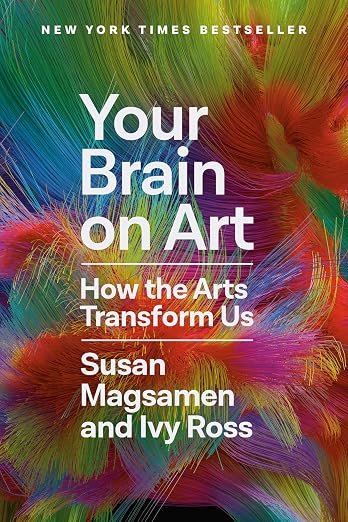
What is art? Many of us think of the arts as entertainment—a luxury of some kind. In Your Brain on Art, authors Susan Magsamen and Ivy Ross show how activities from painting and dancing to expressive writing, architecture, and more are essential to our lives.
We’re on the verge of a cultural shift in which the arts can deliver potent, accessible, and proven solutions for the well-being of everyone. Magsamen and Ross offer compelling research that shows how engaging in an art project for as little as forty-five minutes reduces the stress hormone cortisol, no matter your skill level, and just one art experience per month can extend your life by ten years. They expand our understanding of how playing music builds cognitive skills and enhances learning; the vibrations of a tuning fork create sound waves to counteract stress; virtual reality can provide cutting-edge therapeutic benefit; and interactive exhibits dissolve the boundaries between art and viewers, engaging all of our senses and strengthening memory. Doctors have even been prescribing museum visits to address loneliness, dementia, and many other physical and mental health concerns.
Your Brain on Art is a portal into this new understanding about how the arts and aesthetics can help us transform traditional medicine, build healthier communities, and mend an aching planet.
Featuring conversations with artists such as David Byrne, Renée Fleming, and evolutionary biologist E. O. Wilson, Your Brain on Art is an authoritative guide to neuroaesthetics. The book weaves a tapestry of breakthrough research, insights from multidisciplinary pioneers, and compelling stories from people who are using the arts to enhance their lives.
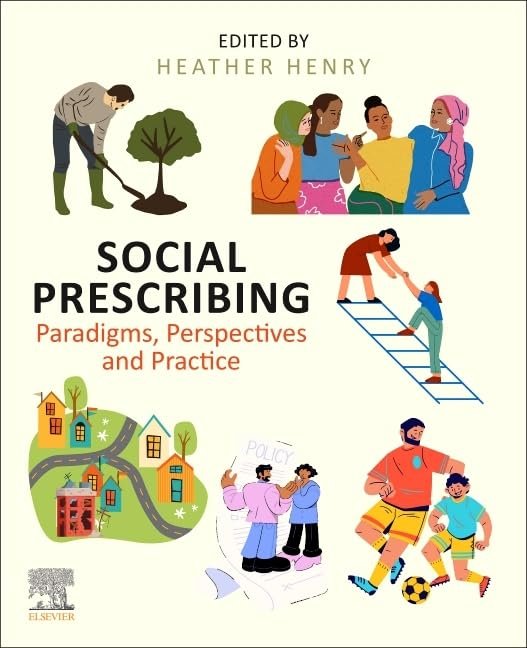
Social Prescribing – the connection of people to communities, services and activities to meet their practical, social and emotional needs – has become an increasingly important element of healthcare policy. As debate intensifies over an appropriate national model, this new book provides the first comprehensive overview of the entire concept of social prescribing.Social Prescribing: Paradigms, Perspectives and Practice pulls together arguments, evidence and resources to define social prescribing and analyze how it can change lives. It considers a range of paradigms for improving health and wellbeing through social approaches, and provides real-life examples of where the theory has been realized in practice.
The book is well-balanced and easy to understand, making it ideal for healthcare practitioners, researchers and policy makers who are interested in exploring the potential of social prescribing for improving health and wellbeing.Editor Heather Henry is former chair of New NHS Alliance (now The Health Creation Alliance CIC), which influences national health strategy and policy on health inequalities and wellbeing. Her NHS career in primary care as both a practising Queen’s Nurse and NHS director, combined with her experience of the voluntary community and social enterprise sector, ideally qualifies her to curate and interpret a wide range of contributions from household names to seldom-heard voices.
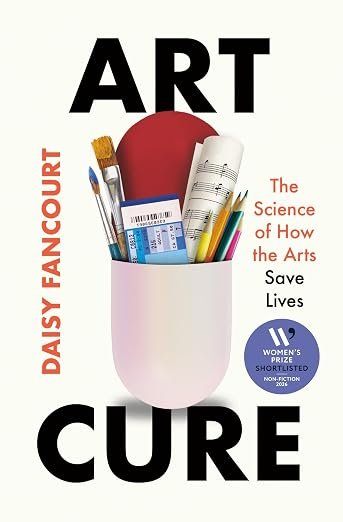
Shortlisted for the 2026 Women’s Prize for Non-Fiction
A groundbreaking exposé showing how the arts―alongside diet, sleep, exercise and nature―are the forgotten fifth pillar of health
From cradle to grave, engaging in the arts has remarkable effects on our health and well-being. Music supports the architectural development of children’s brains. Artistic hobbies help our brains to stay resilient against dementia. Dance and magic tricks build new neural pathways for people with brain injuries. Arts and music act just like drugs to decrease depression, stress, and pain, reducing our dependence on medication. Going to live music events, museums, exhibitions, and the theater decreases our risk of future loneliness and frailty. Engaging in the arts improves the functioning of every major organ system in the body, even helping us to live longer.
This isn’t sensationalism, it’s science: the results of decades of studies gathering data from neuroimaging, molecular biomarkers, wearable sensors, cognitive assessments, and electronic health records. From professor Daisy Fancourt, an award-winning scientist and science communicator and director of the World Health Organization’s Collaborating Centre for Arts and Health, this book will fundamentally change the way you value and engage with the arts in your daily life and give you the tools to optimize how, when, and what arts you engage in to achieve your health goals. The arts are not a luxury in our lives. They are essential.
On Social Prescription 1
On Social Prescription 2